About the role#
We want our vehicles to understand the physical world in real-time rather than relying on static maps. Roads change, and the environment a car encounters is often more complex than any pre-recorded data. We are looking for a Research Intern to help our planning systems build a more accurate, up-to-date picture of the world to navigate complex scenes. You will take on open problems from real-world driving and solve them using research methods. You will report to the team lead and own your project from initial definition to validation. While we support publishing strong results, the primary goal is to solve problems that improve our product.
What you'll do#
- Survey the latest research in scene understanding, prediction, and planning, and adapt it into practical approaches.
- Design and implement deep learning models that build a real-time understanding of the driving environment using onboard sensors.
- Train and evaluate models on large-scale data from our driving logs and public benchmarks.
- Lead failure analysis to identify where and why models fall short.
- Define metrics that connect perception quality to vehicle driving performance.
- Turn successful prototypes into solutions that integrate with our planning stack.
- Collaborate with our Perception, Prediction, Planning, and Mapping teams to move experiments into the product.
What you'll need#
- Current enrollment in an M.S. or Ph.D. program in Computer Science, Robotics, Electrical Engineering, Machine Learning, or a related field.
- Availability for a full-time, on-site internship of 3 to 6 months.
- Strong programming skills in Python and experience with PyTorch or JAX.
- Hands-on experience designing, training, and debugging deep learning models for computer vision, 3D perception, or sequential decision-making.
- A solid understanding of autonomous driving fundamentals, including perception, prediction, and motion planning.
- Ability to read research critically, form hypotheses, and conduct well-controlled experiments.
- Excellent communication and collaboration skills.
- Preferred: Publications at venues like CVPR, ICCV, ECCV, NeurIPS, ICLR, ICML, ICRA, IROS, CoRL, or IV.
- Preferred: Experience with multi-modal sensor fusion, BEV representations, transformers, graph neural networks, or uncertainty estimation.
- Preferred: Experience with large-scale model training, data pipelines, public autonomous driving datasets, and C++ or CUDA.
Location & details#
- Location: San Jose, California.
- Modality: On-site.
- Term: Rolling, 3 to 6 months.
- Status: Full-time internship.
- Compensation: $46 per hour.
About DiDi Autonomous Driving
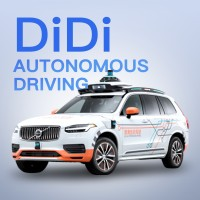
DiDi Autonomous Driving develops Level 4 autonomous driving technology. The company operates as an independent entity focused on research, development, and product application. It holds public road testing licenses in Beijing, Shanghai, Suzhou, and California. Founded in 2016, the firm currently employs between 501 and 1,000 people and maintains its headquarters in Beijing.
How to get in at DiDi Autonomous Driving
Applying early for a role at DiDi Autonomous Driving provides a distinct advantage before the applicant pool grows. Intern Insider sends an instant alert the moment a role matching your target is published anywhere, ensuring you can submit your materials among the first candidates. Getting your application in early often means your profile is reviewed before the recruiter has to manage a large pile of resumes. You can use this timing to your benefit by preparing your materials well in advance. Intern Insider also surfaces the recruiters behind the company roles so you can reach out directly to ask about the position or a referral. Connecting with a human contact at DiDi Autonomous Driving materially improves your response rates compared to submitting into a general queue. A direct message shows you have done your research and are genuinely interested in their specific technical challenges.